The history of Marrakech markets: a journey through time, trade, and tradition, including Marrakech Markets
Marrakech is not just a city to visit; it’s a city to live in every detail. Nowhere is this experience more vividly, dynamically, and with greater historical depth than in its traditional markets, known locally as “souks.” The history of Marrakech’s souks and Marrakech Markets is inseparable from the city’s founding. These markets are not merely places of trade; they are living museums, pulsating with centuries of culture, crafts, and social life, and continuing to unfold every day
Walking through the markets of Marrakech is like stepping into a timeline that stretches back nearly a thousand years. Every alley, every spice stall, every leather workshop carries echoes of ancient caravans, royal dynasties, and generations of artisans who shaped the soul of the Red City.
Exploring the Marrakech Markets offers an unparalleled glimpse into the vibrant culture and daily life of the city.
The Birth of Marrakech and the Rise of Its Markets
Marrakesh was founded in 1070 by the Almoravids, benefiting from its strategic location at the crossroads of major trans-Saharan trade routes. From the beginning, markets were essential to the city’s survival and growth. Goods such as gold, salt, spices, textiles, and slaves were transported from sub-Saharan Africa through Marrakesh on their way to Europe and the Mediterranean basin.
trade expanded and the city grew richer, these informal markets evolved into organized souks, each dedicated to a specific craft or product. This structured system remains largely intact today, making Marrakech one of the best-preserved medieval market cities in the world.
Souks as the Economic Heart of the City
The markets of Marrakech have long been renowned throughout history, serving as the lifeblood of the city’s economy. Merchants and artisans operated under strict rules established by local authorities and religious leaders. The market inspector, known as the muhtasib, oversaw quality control, fair pricing, and ethical trade.
Each market specialized in a specific trade:
- Souk Semmarine for textiles and clothing
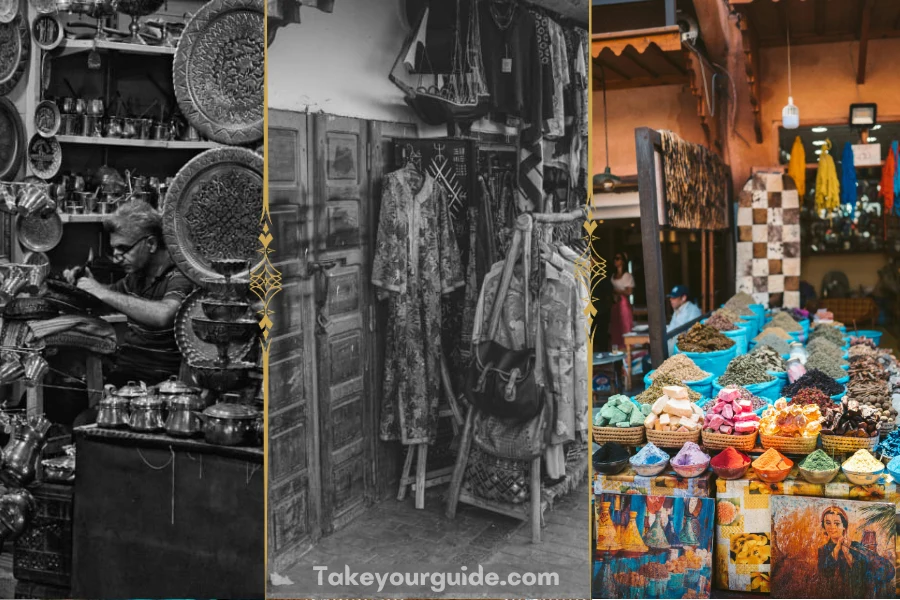
- Souk Haddadine for metalwork
- Souk Cherratine for leather goods
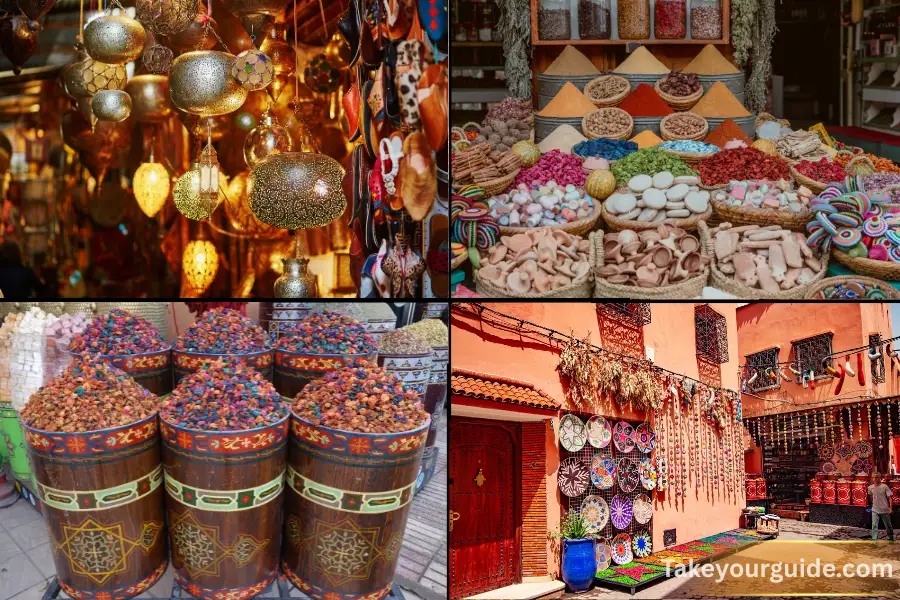
- Souk Attarine for spices and perfumes
- Souk Dyeingeine for colored fabrics
This specialization helped maintain high standards and allowed for the transmission and inheritance of skills across generations. Even today, many families in Marrakech still practice the same crafts their ancestors mastered centuries ago.
The Cultural and Social Role of the Marrakech Market
Beyond commerce, the Marrakech market has always been a social space. It was where news spread, alliances formed, and traditions were preserved. Markets were meeting points for locals from different tribes, regions, and backgrounds. Berbers from the Atlas Mountains, Arabs from the plains, and traders from Africa all converged here.
Storytellers, musicians, snake charmers, and herbal healers added layers of cultural richness, especially around Jemaa el-Fnaa,
The Markets of Marrakesh During the Imperial Eras
As Marrakesh became the capital of powerful dynasties such as the Almohads and Saadians, its markets flourished. Royal patronage encouraged handicrafts, architecture, and urban planning. Covered markets were built to protect goods from the sun, while caravanserais (hotels) provided accommodation and storage for traveling merchants.
Luxury goods such as silk, jewelry, ceramics, and weapons were produced for the royal court and exported abroad. The markets became a symbol of the city’s wealth and influence in North Africa and beyond.
Experiencing the History with a Local Guide
While it is possible to wander the markets alone, truly understanding their history, symbolism, and hidden stories requires local insight. Many details-such as why certain crafts are located where they are, or how prices were traditionally determined-are invisible to the untrained eye. A professional local guide can transform a simple walk into a deep historical journey, explaining traditions, introducing artisans, and helping visitors connect respectfully with the local culture.
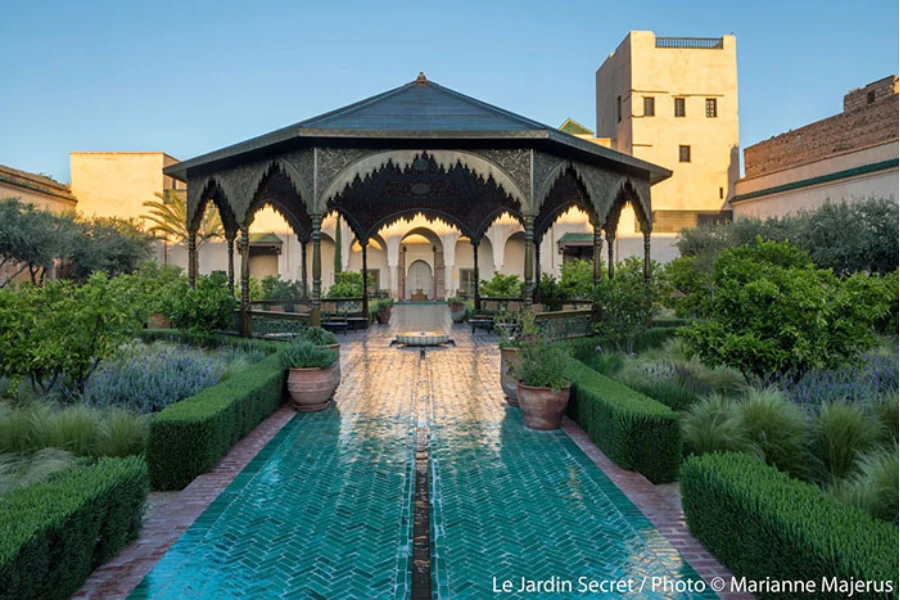
👉 Book Your Marrakech Tour to Souks, The Secret Garden & Medersa Ben Youssef
Why the History of Marrakech Markets Still Matters Today
For travelers, Marrakech’s souks are not merely relics of the past; they are living history. Everything within them represents centuries of accumulated knowledge and identity. Preserving these souks means preserving the cultural memory of Morocco itself. Understanding this history transforms shopping into storytelling and souvenirs into meaningful connections
Additional Reference
Some historical and cultural information related to Marrakech and its traditional markets can also be found on the official Moroccan tourism website. This external reference is provided for general context and documentation purposes.
Conclusion: A Timeless Marketplace
The history of the Marrakech market is a story of resilience, creativity, and cultural continuity. From ancient trade routes to modern tourism, these markets have adapted without losing their soul. They remain places where the past and present coexist, where history is not read in books but lived in the streets.